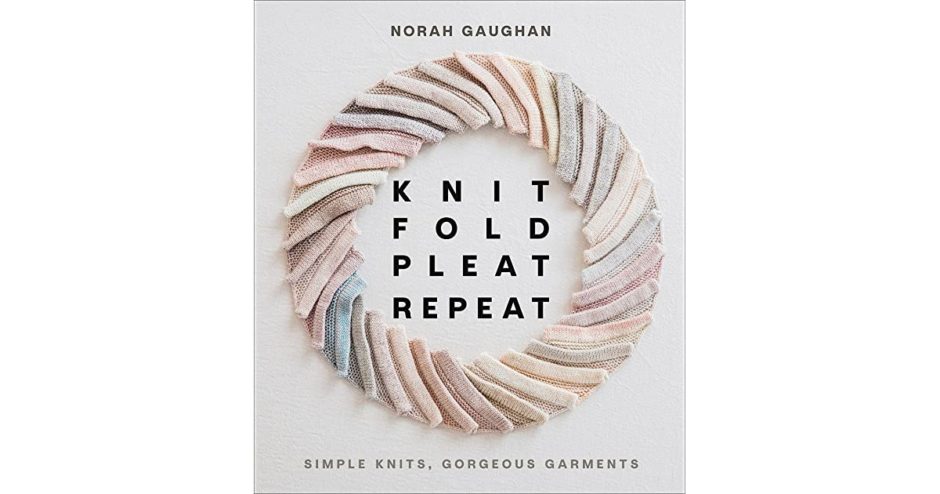
I have a class in my repertoire (although I haven’t taught it in a while) where we play around with pleats, ruching, and ruffles. At the time I created it, there weren’t that many resources about what I thought were very interesting structural techniques. Now there’s a new book to help fill the gap. Let’s take a look at Knit Fold Pleat Repeat by Norah Gaughan (Abrams 2022). It’s a beautiful and sturdy hardcover book with a MSRP of $29.99 ($23.87 at the time of this writing via the link above).
Norah’s designs often play with unconventional garment construction. As she observes, “While still covering the body, and needing to accommodate the head and arms, a sweater can be shaped from a simple rectangle, or folded from a few simple shapes, or composed of multiple geometric shapes joined together.” That means if you’re accustomed to knitting all your sweaters with the same traditional front, back, and two sleeves, some of the designs may blow your mind. (But in a good way.)

Before I get ahead of myself, let’s take at look at the meat of the book: five chapters of techniques and patterns. As always with Norah’s books, things are thorough and organized. The first set of patterns are easiest, with each successive chapter adding something else to the mix. Even if you’re an inexperienced knitter, you can work your way through in order, without getting overwhelmed.
Each pattern has nice clear directions with charts, schematics, diagrams for patterns that are folded or sewn together, some good photos that show the knitted fabric close-up, and written-out patterns for those who prefer them to charts. Another excellent feature: each pattern is followed by a section called “Design Your Own,” which gives a window into Norah’s thought processes as she designed the garment. If you like to tinker with your own design variations, this will give you plenty of inspiration and tips for ways to tweak the patterns. In this regard, KFPR reminds me a bit of some of Bristol Ivy’s recent books: it isn’t solely a pattern collection and it isn’t solely a technical reference. (It’s two – click – two – click – two books in one!)
The only way to appreciate the creativity and ingenuity of the book is to take a look at some of the techniques. The first pattern chapter (called “Square Up”) starts with rectangles and squares — familiar shapes for any knitter who has made a blanket or stole. Take a look at Weave, a cardigan made entirely from rectangles, no shaping.
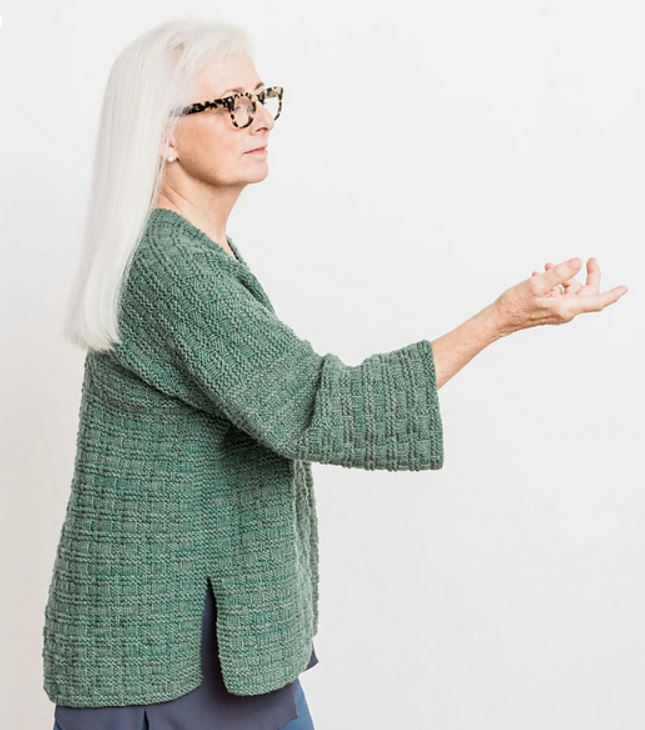
As Norah points out, if you’re new to knitting, a sweater designed without complex shaping is a great way to begin. Now think of all the variations that you can plug into a sweater made of rectangles: switch the stitch pattern, change sleeve length, make the rectangles narrower or wider. (In fact, you can see what happens when you widen the body of the sweater but keep the sleeves relatively narrow in the Rib Jacket below: a more boxy body with a looser fit.)

This chapter contains some smaller projects, like a scarf, a cowl, and a hat, if you’d like to experiment with proportions or stitch patterns without the bigger investment of a full-size garment.
In the next chapter, “Manipulate,” you’ll build on rectangular structure by adding textural or sculptural elements. Several patterns play with smocking (which you may think of as a sewing technique but also creates fascinating knitting shapes), folding or gathering fabric, then tacking it down.
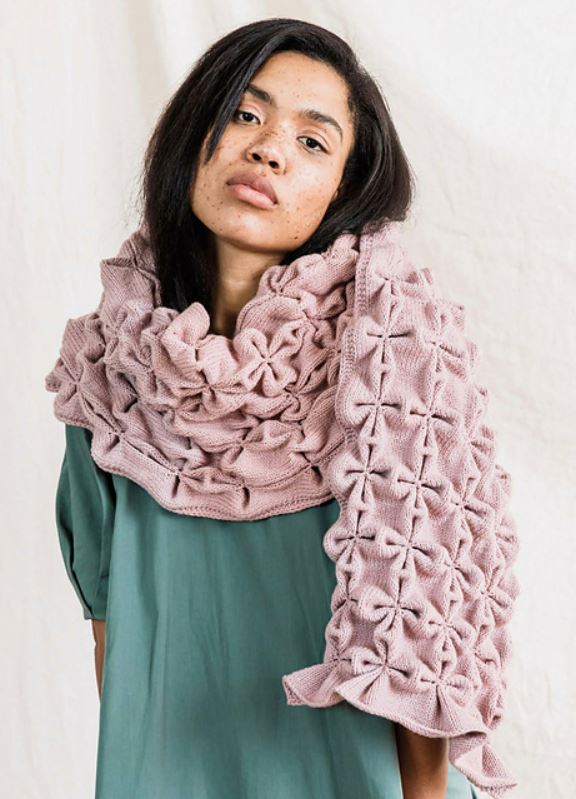
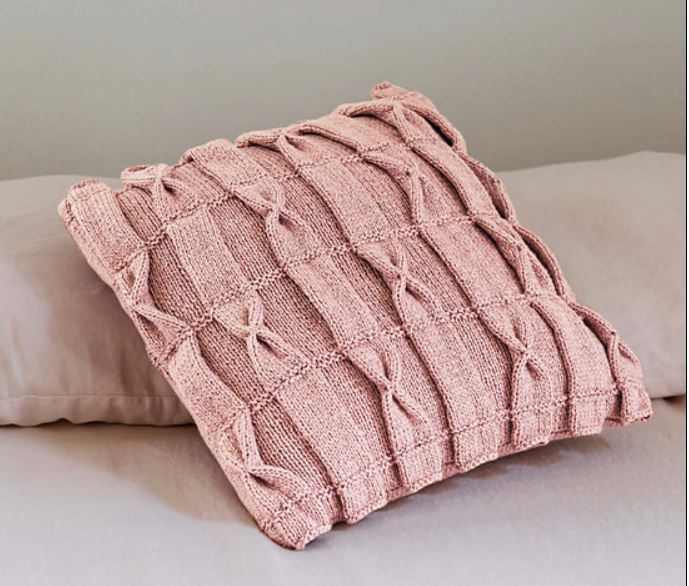
Floret, above, creates daisy-like shapes while the Smocked pillow plays with a tubular structure.
Now add a structural motif to a sweater and you’ve got Hussar. It sets tucks on a diagonal to create an eye-catching front band.
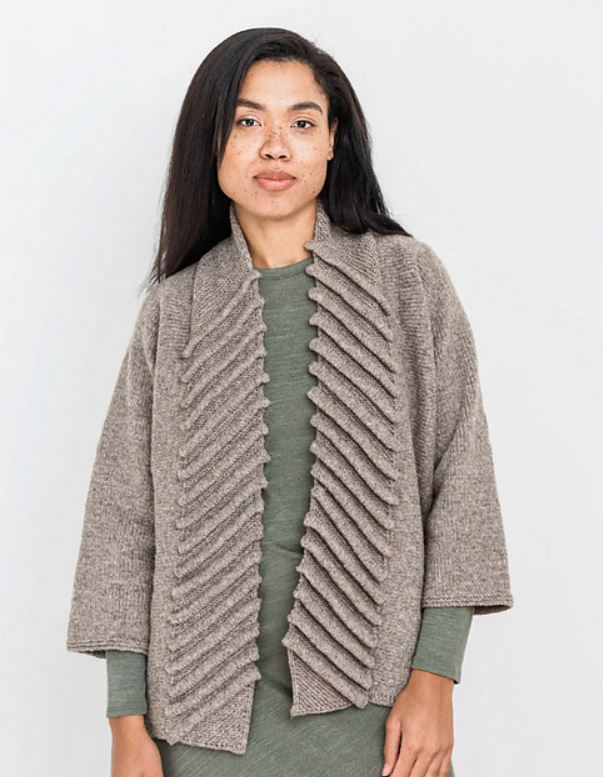
Scroll back to the book cover above — that’s not a wreath on the cover, but a cowl which uses the same kind of pleat as Hussar, but with lighter-weight yarn and soft color changes.
In the next chapter (“Manipulate”), Norah introduces triangles and hexagons to the mix. Here’s Kite, where the sweater’s structure is an integral part of the design.
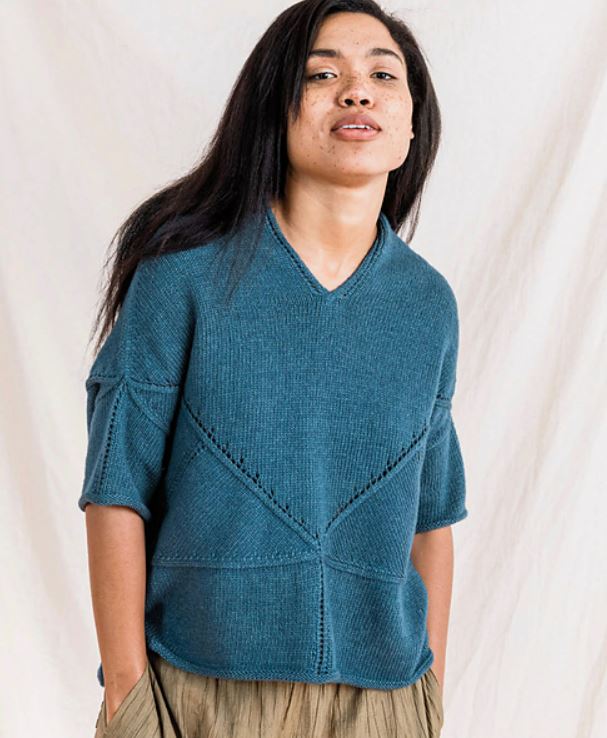
The sweater is ingeniously composed of several geometric shapes: a big square, a rectangle, two triangles, and two smaller squares. Knitting shapes on the bias and eyelet details add just enough to the design without drawing attention away from the structure.
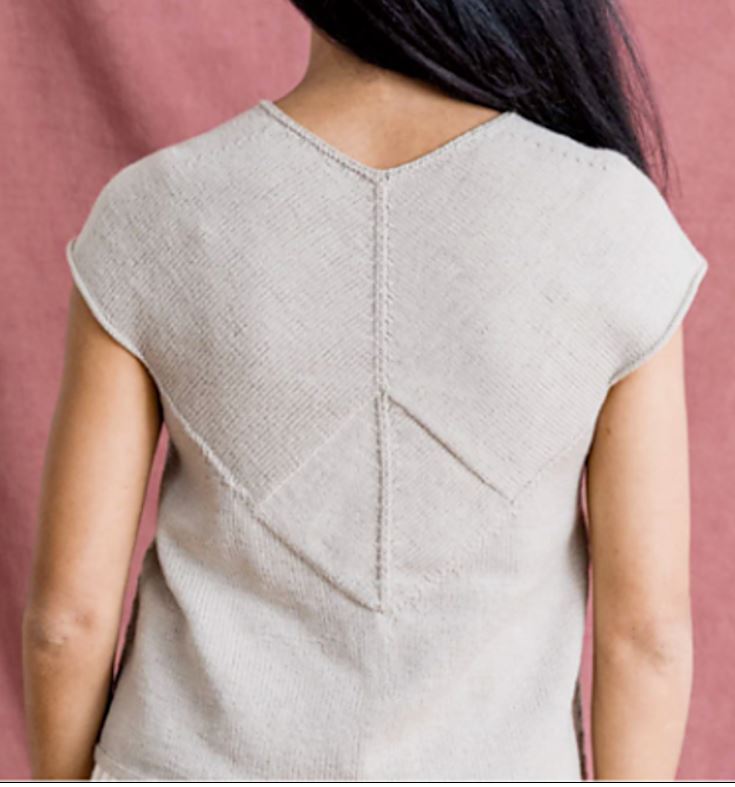
This garment is called Forty-Five Degrees, as in the angle, and uses mitered squares for both structure and embellishment. I love the back detail:
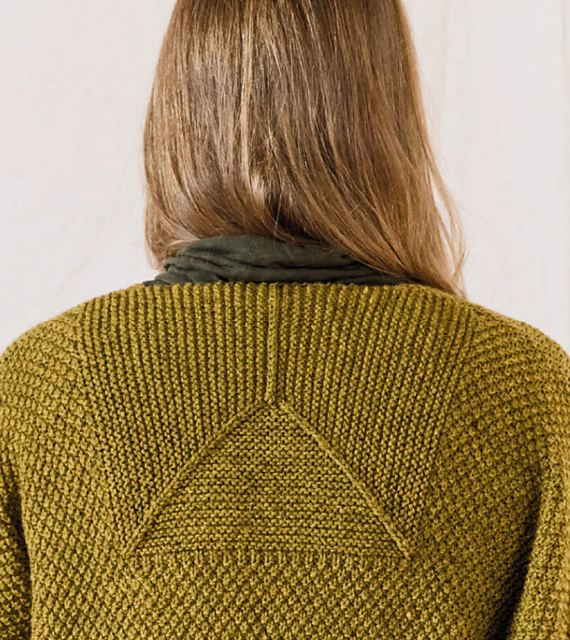
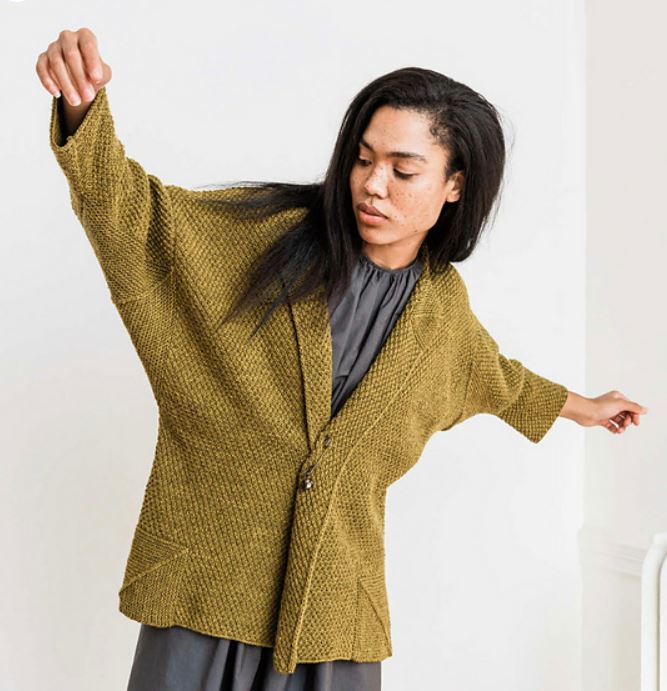
Mitered squares form the lapel and create side slits at the bottom sides, as well as the undersides of the dolman sleeves.
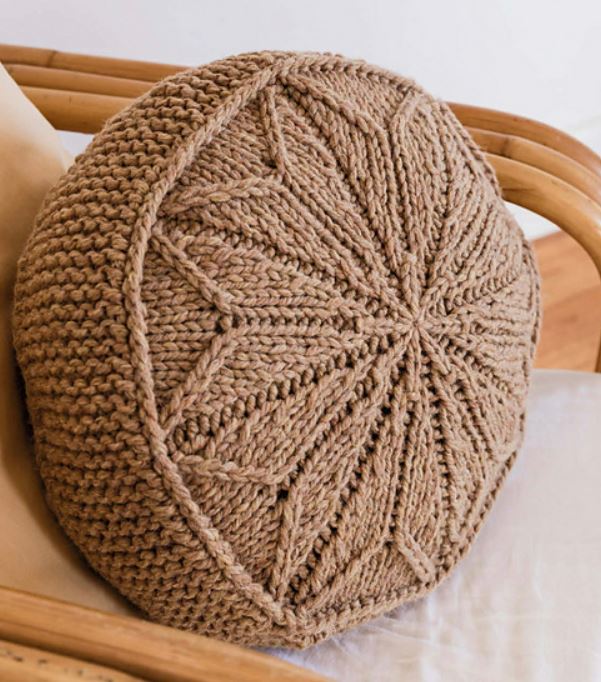
Hexagons make an appearance too, as with this sweet pillow cover and a rug (not shown) which is honestly too pretty to step on.
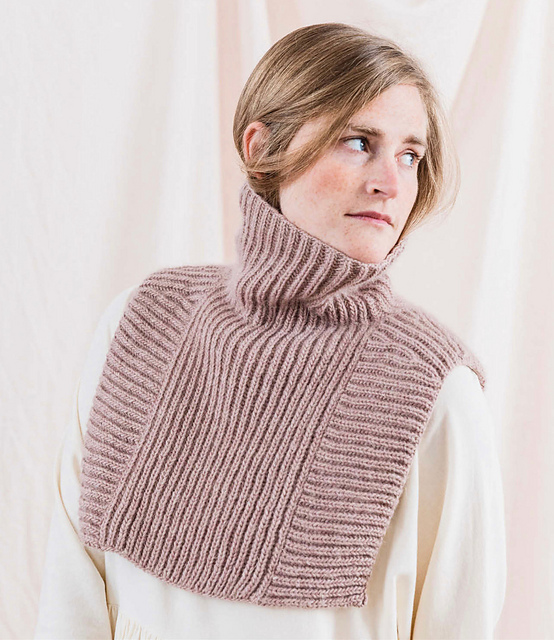
Chapter 5 adds shaping to the mix, eliminating some of the boxiness from the rectangular designs, and using techniques like short rows. Though I’m skeptical about this whole dickey thing (my theory is if you remember it from the first time it was trendy, you’re less excited about bringing it back again), here’s an elegant, pared-down design for one which makes brioche stitch and clever shaping the stars (left).
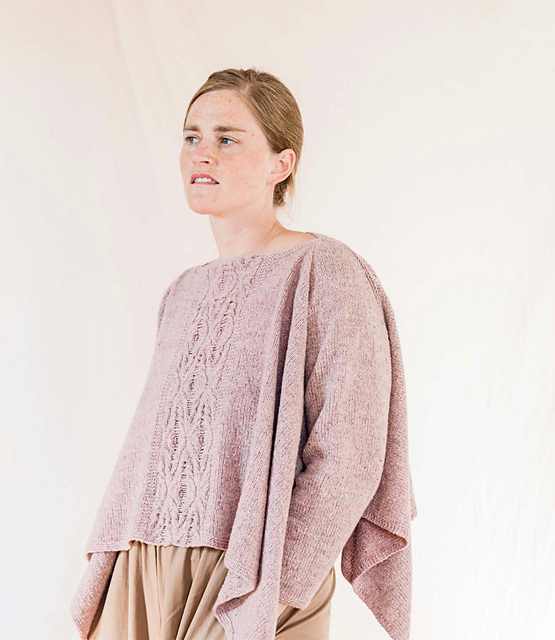
Afloat (above right) plays with the soft drape of the fabric coming from the shoulders, with a gorgeous inset front and center. Spoiler: while this looks like it might be complicated to knit, it’s made of a rectangle with sleeves added. It’s all about the drape!
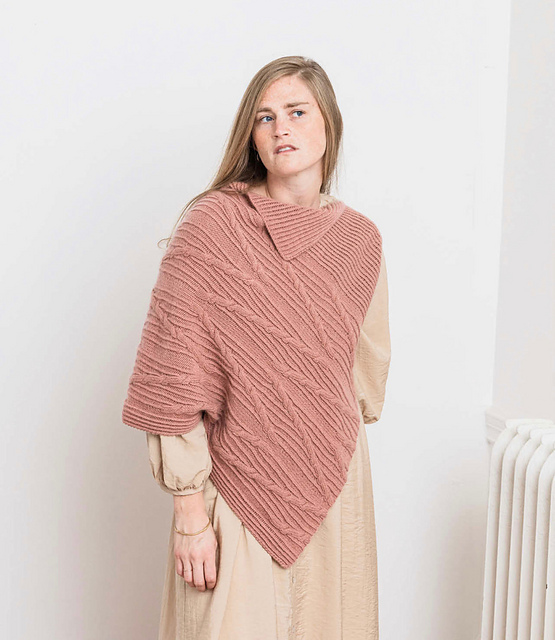
Outward (below) is a poncho set at an angle. Look at the wonderful way the twisted rib is broken up with cables. Very cool construction.
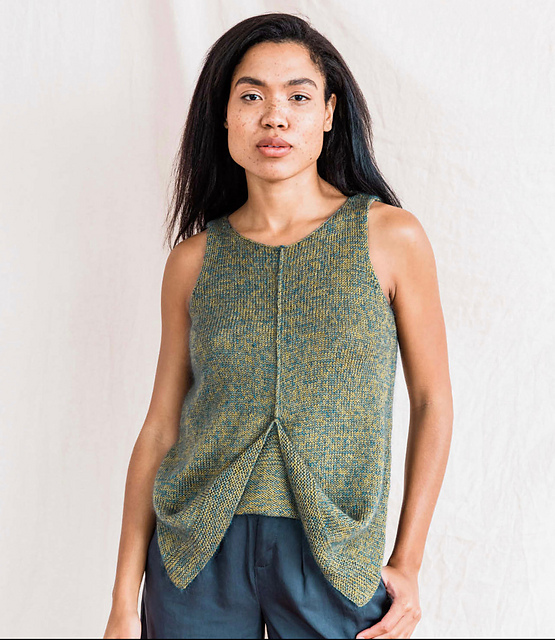
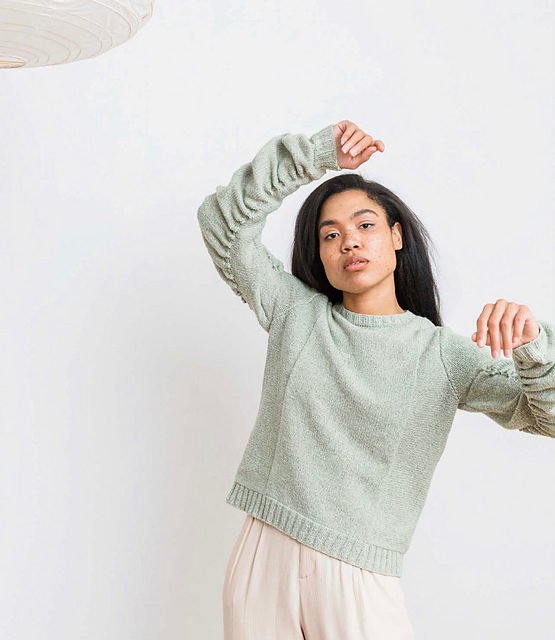
The final chapter of designs is called “Hybrid” and as you might expect, combines the techniques used earlier with traditional sweater shapes. These designs tend to be fairly simple except for one or two dramatic elements added like the draping element in the front of the Skyward tank (left) or the ruching added to the sleeves (right).
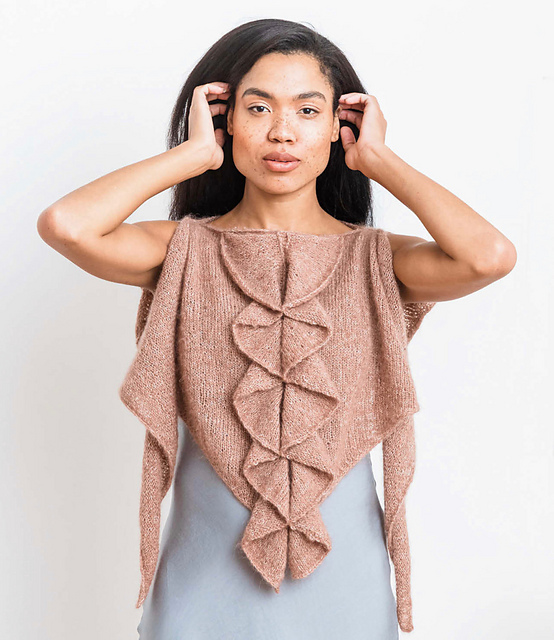
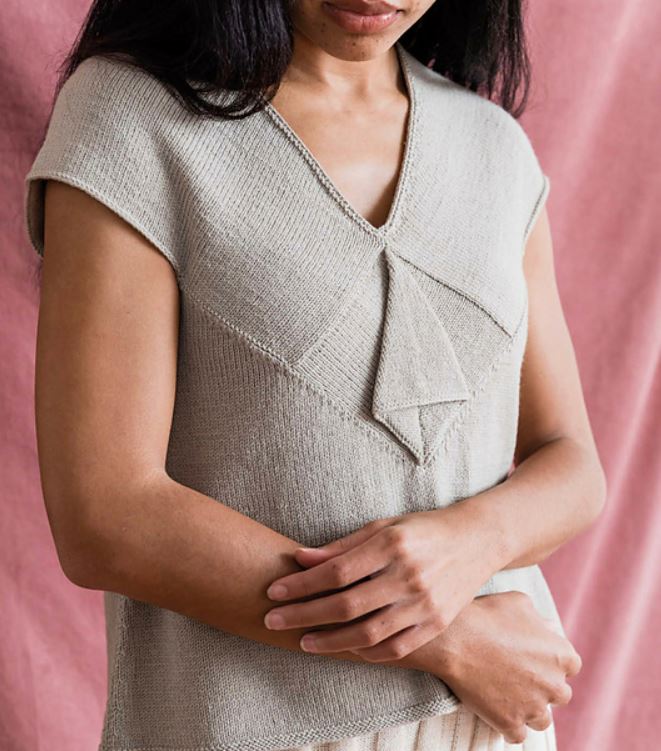
Some of these patterns are dramatic, like the shawl/layering piece called Jabot:
The Squash top was inspired by origami and I love the lines created by its construction.
With 36 patterns in the book plus tips for endless variations, this book will keep you going for a good long while. The garment breakdown: 3 shawls/ponchos, 8 cardigans/jackets, 10 sweaters/tops, a hat and a headband, 2 pillows, one rug, a skirt, and nine cowls/scarves/neck-thingies. The patterns feature expanded size ranges (from around 32 ins. to 60-70 ins., depending on the style and ease of the sweater) and of course the accessories are one size. One thing that you may notice that’s a little different about the book: the models and styling. Only a few models are used and they are styled very naturally, with a minimum of make-up or fuss. They’re also photographed in a minimalist style, against plain backgrounds. Curious to hear your reaction to the styling; I know folks have decided opinions about the “look” of a book.
I always look forward to whatever is coming from Norah’s needles and this book is no exception. It features an interesting mix of patterns, some fascinating techniques that manipulate knitted fabric, and plenty of instruction so you don’t get lost. If you’re interested in designing or just playing around with variations, Norah’s insights into her design process and the factors she considers while creating a new design are a must-read. Keep the good stuff coming, Norah!
If you purchase something through the affiliate link above, I may receive a small (very small) commission. I believe my use of photos in this post qualifies as fair use but if you are the copyright owner and disagree, please contact me so that I can rectify the situation.
