
The road to hell may be paved with good intentions, but that’s not gonna stop me from making some New Year’s resolutions of my own. One of those resolutions is to blog a bit more (I know, I know). So here we go with a brand-new book review of a brand-new book to start the year.
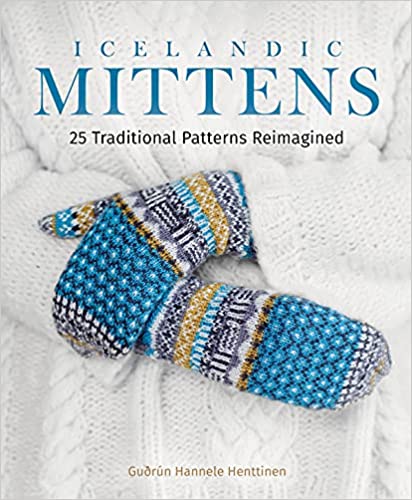
Icelandic Mittens: 25 Traditional Patterns Reimagined by Guðrún Hannele Hentinnen is a perfect way to escape from the cold, hard, Omicron-y world out there. You know how much I love textile history and folk art; this book would make me “squee” if I were a “squee-er.” (I am not.) Hentinnen has taken a deep dive into the archives of the Textile Museum in Blönduós, Iceland and found some treasures. The museum opened in the 1970s and was expanded later on, with an extensive collection of embroidery, wool and woolen items, and national folk costumes. The author has selected 25 mittens from the museum’s archives and recreated their patterns, updating and modernizing a bit.

As a textile nerd, I love that each pattern starts with a photograph of the original mittens as well as the name of the knitter who made them. Some of the original mittens are undated; others go back 50, 60, 70 years or more. You’ll also find the name of the area where the mittens were created and (where possible) information about the origins of the pattern.
For example, here are the Loa mittens, which originate from the West Fjords and feature pattern bands called “laufvioarvettlingar” or leaf mittens. The originals are knit in off-white with bright bands of colorwork at the top and bottom (and around the thumb).
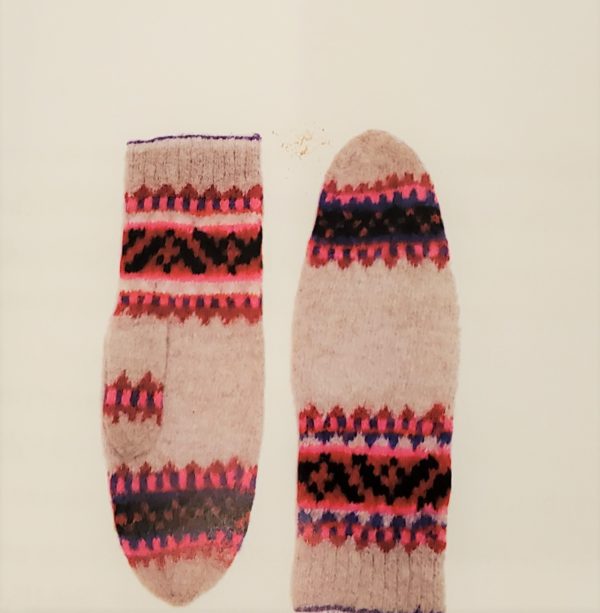
Here are the updated mittens, worked in a golden tweed with blue, pink and black accents.
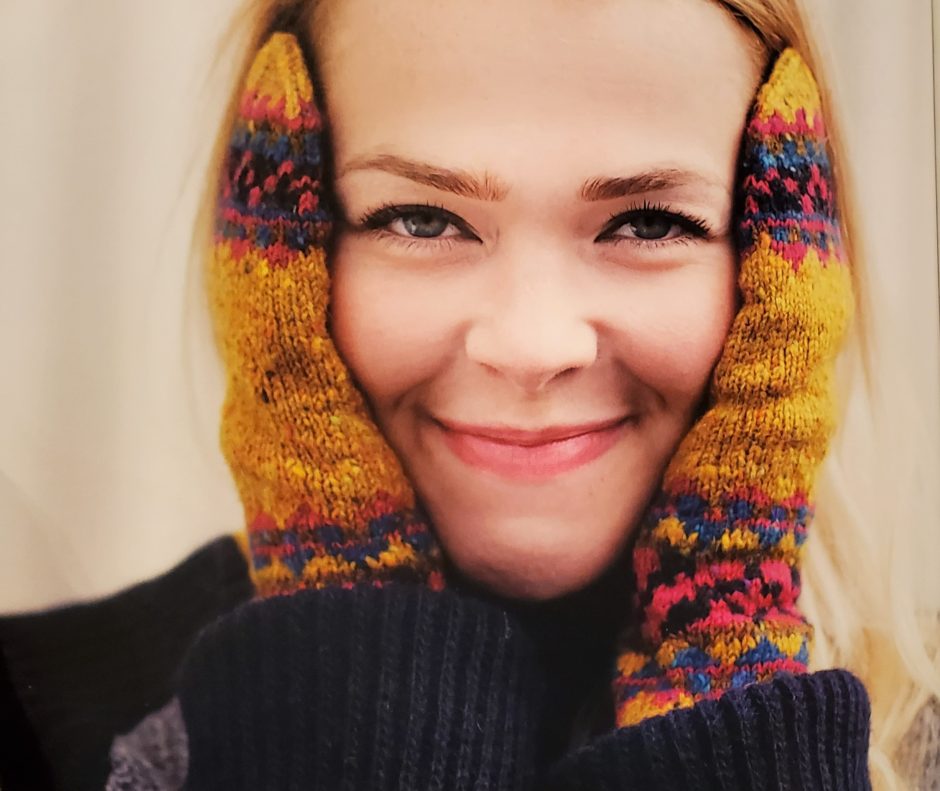
Another great feature of the book is that each design is shown in two alternate colorways using contemporary yarn, not just one. Here’s the original Lara, with a chevron cuff pattern and feather motif. (In case you’re curious, the headmistress of a domestic college taught her students how to make this pattern in the first half of the last century.)
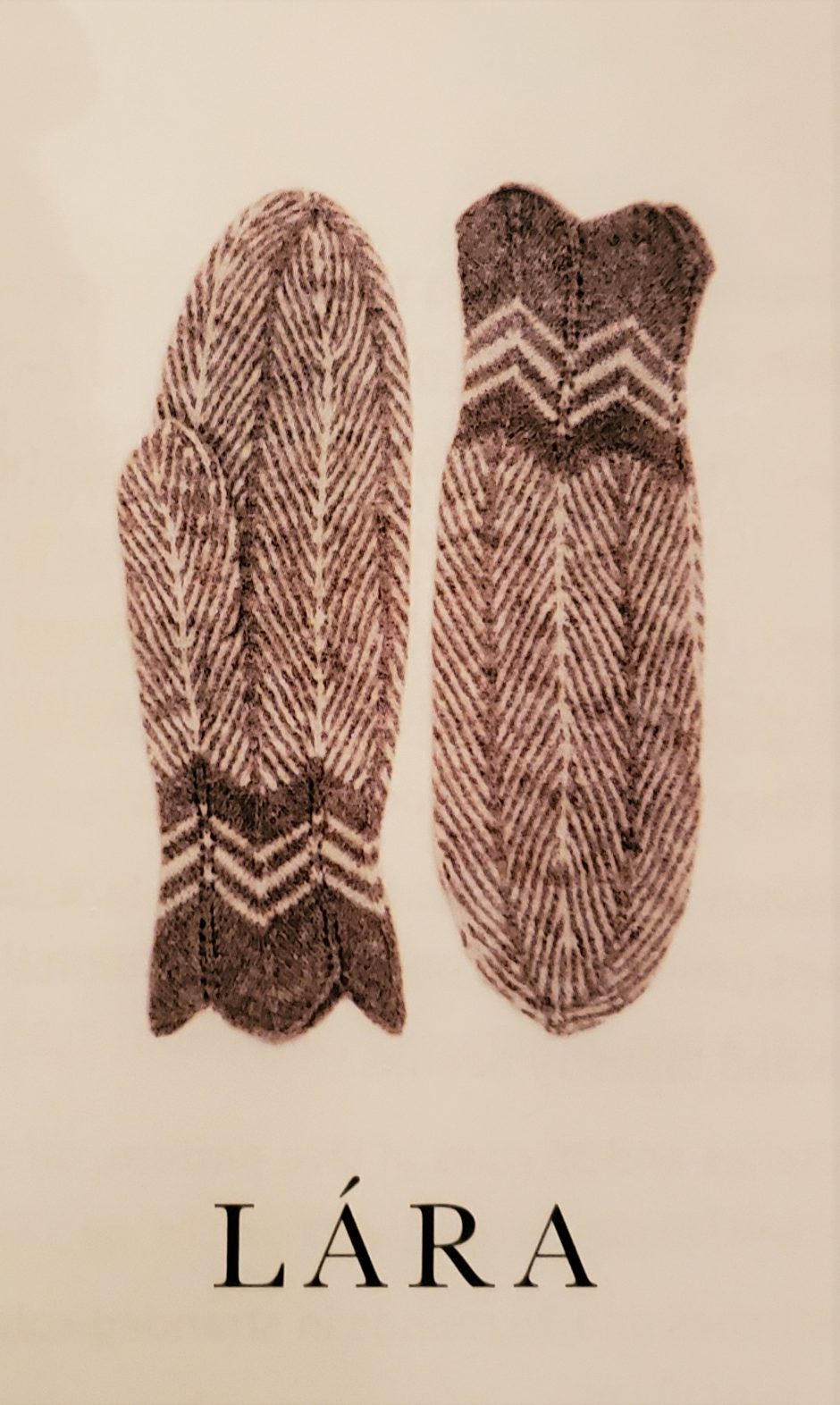
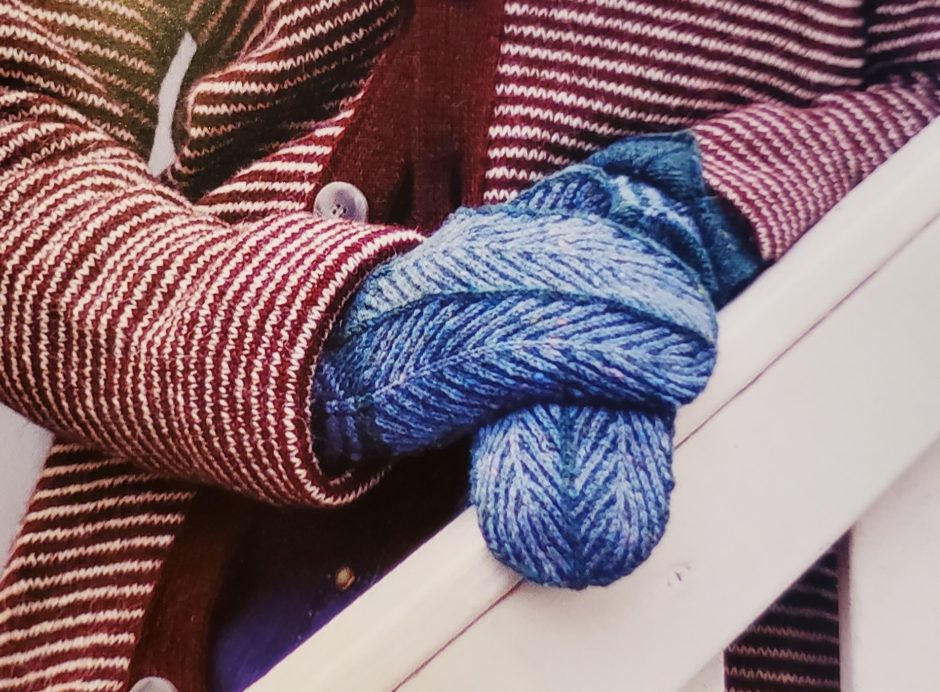
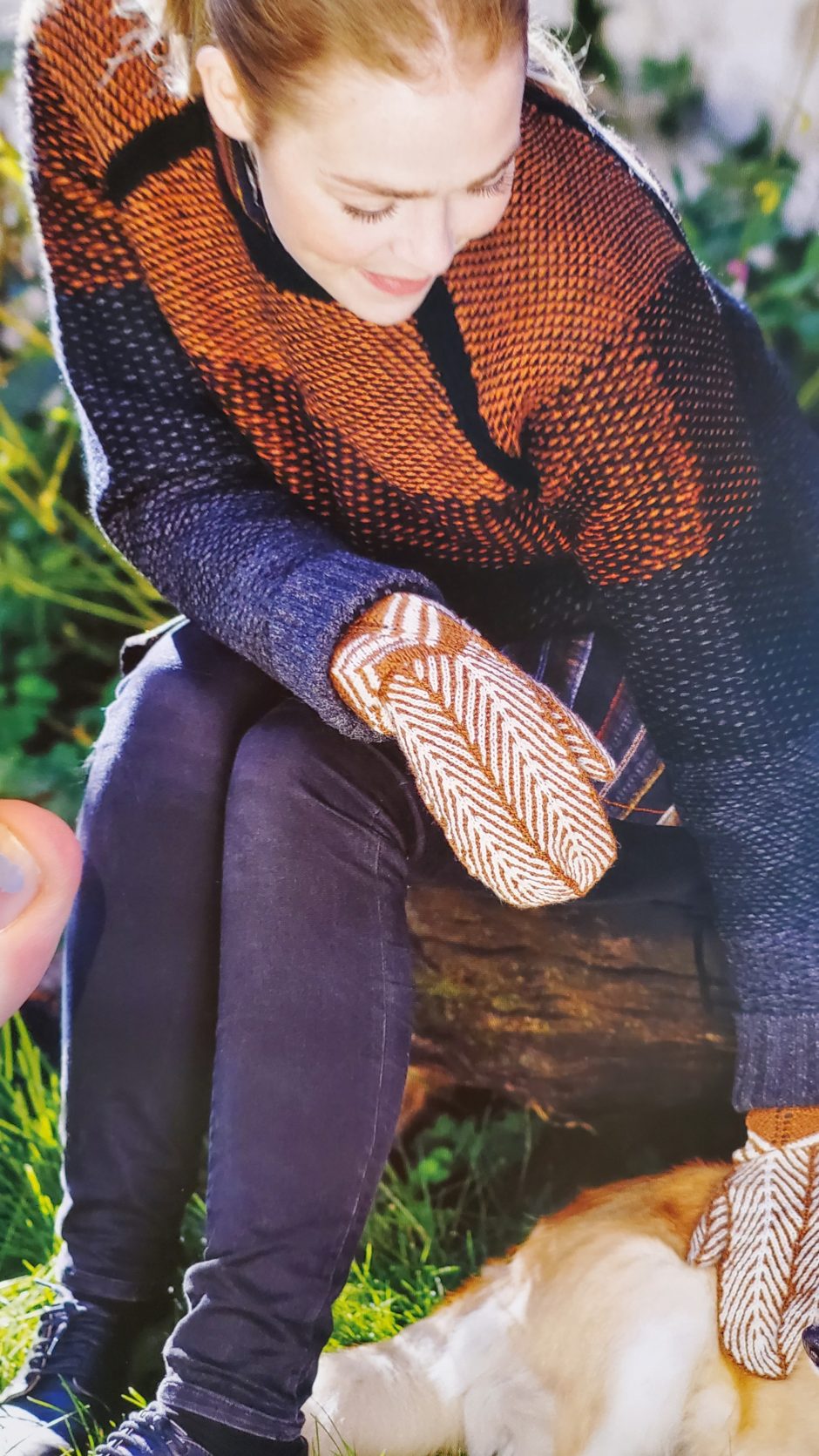
Here, one of the reknits stays faithful to the original natural and brown colors, but the mittens look very different when knit in blue tones.
It’s not always practical to reknit designs for a book or pattern, so kudos to the author on giving us ideas for alternate colorways. (If I had one quibble, I’d like to see more full-on images of the mittens. Some are shown from angles that make it a little difficult to see the whole pattern. But this is a minor nit.)
The third aspect of the book that delights me: the variety of styles. You’ve got traditional patterns like the Norwegian star; a boxed pattern evocative of Sanqhar knitting; traditional blue or brown with white color combos plus some strikingly different hues.

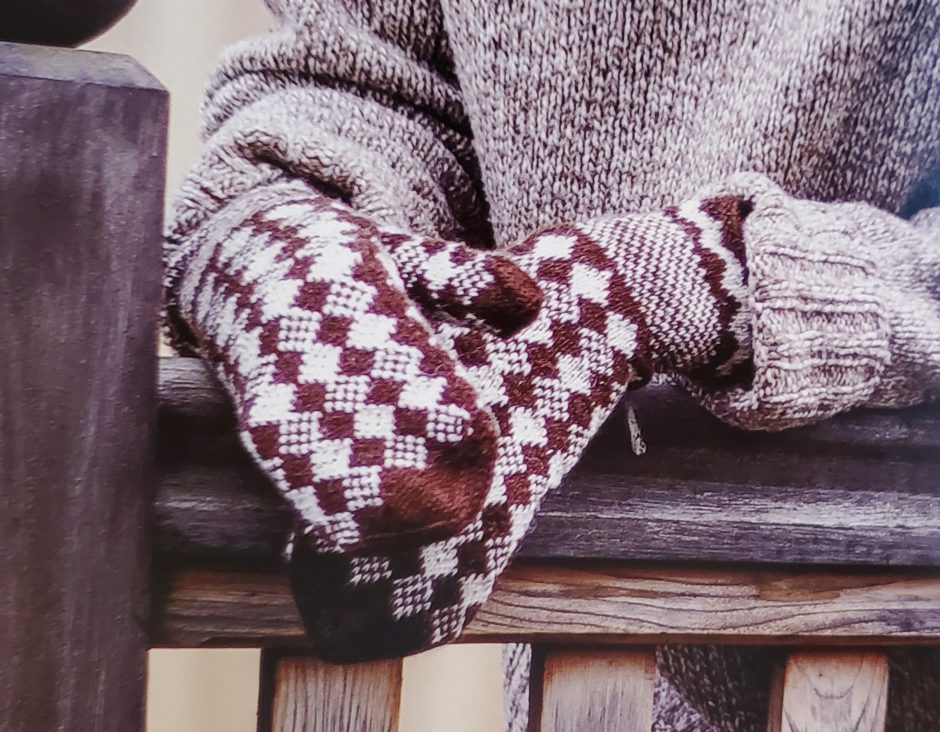
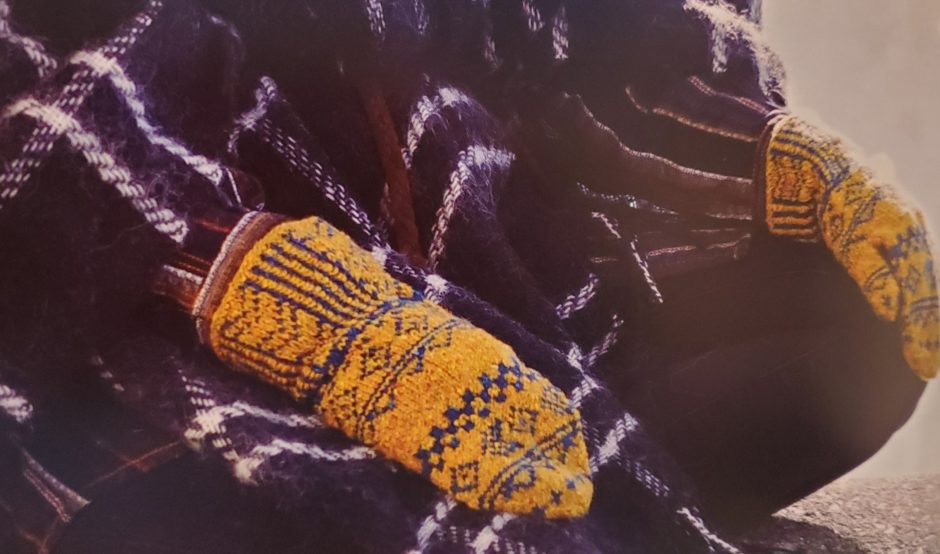
You’ll find ribbed cuffs, picot edges, chevron cuffs, colorwork cuffs; lots of afterthought thumbs but also a few thumb gussets, a thumb that’s picked up and knit onto the mitten, and one where the thumb is knit separately then sewn on.
If you’re ready for a change from stranded knitting, you can try the Erla lace mittens
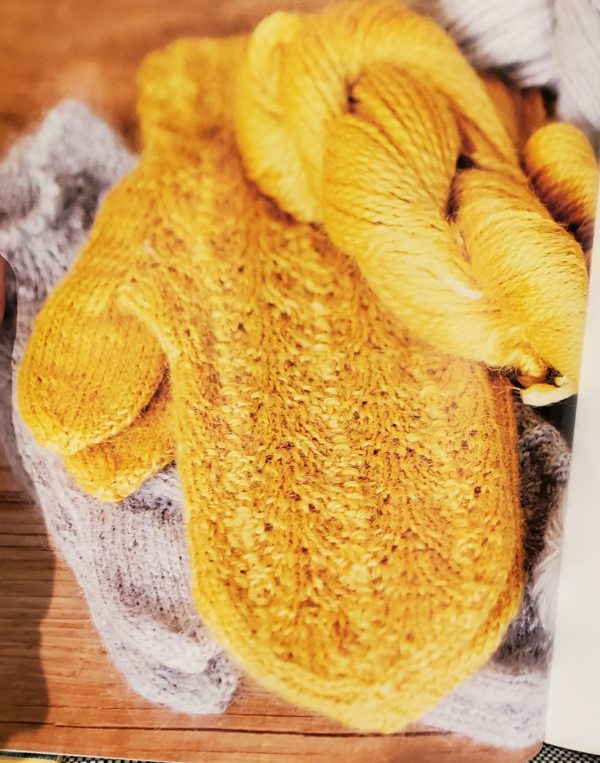
or perhaps a pair of gloves.
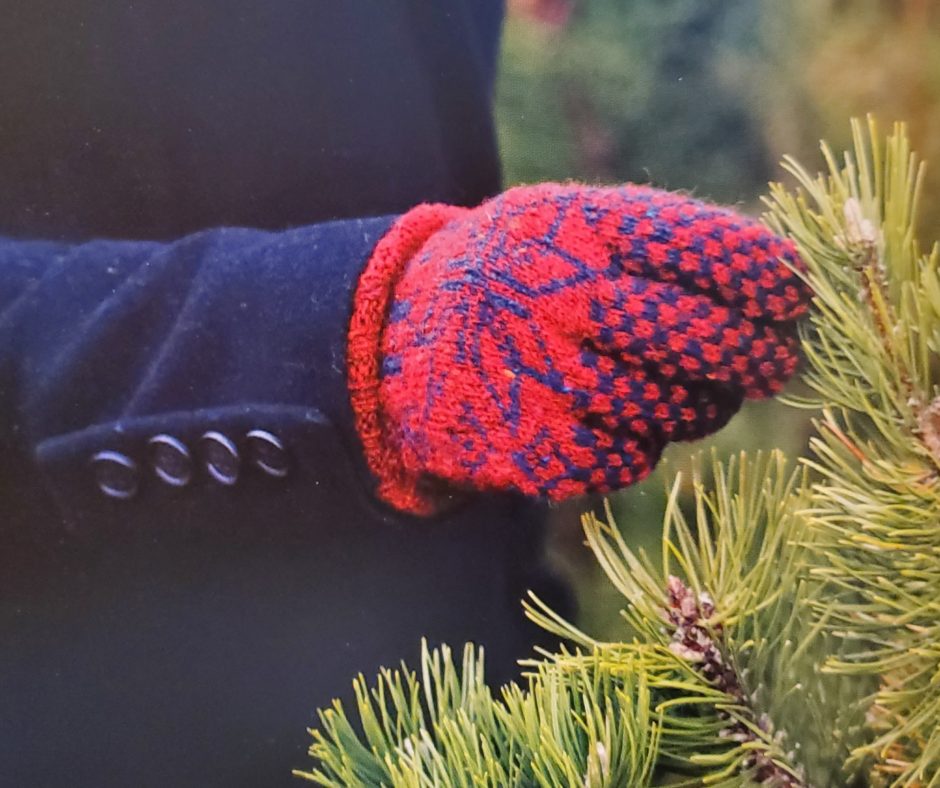
This is a hardback book with about 272 pages, full-color, with patterns both written-out and charted. I do appreciate that the instructions are set out clearly in black (not that dreadful hard-to-read gray that’s become trendy!) and have generous spacing. The charts are big and in color, another excellent feature. I regret that I haven’t had the opportunity to knit up any of the patterns but since the author is a designer, tech editor and knitting shop owner, I suspect they will be well done.
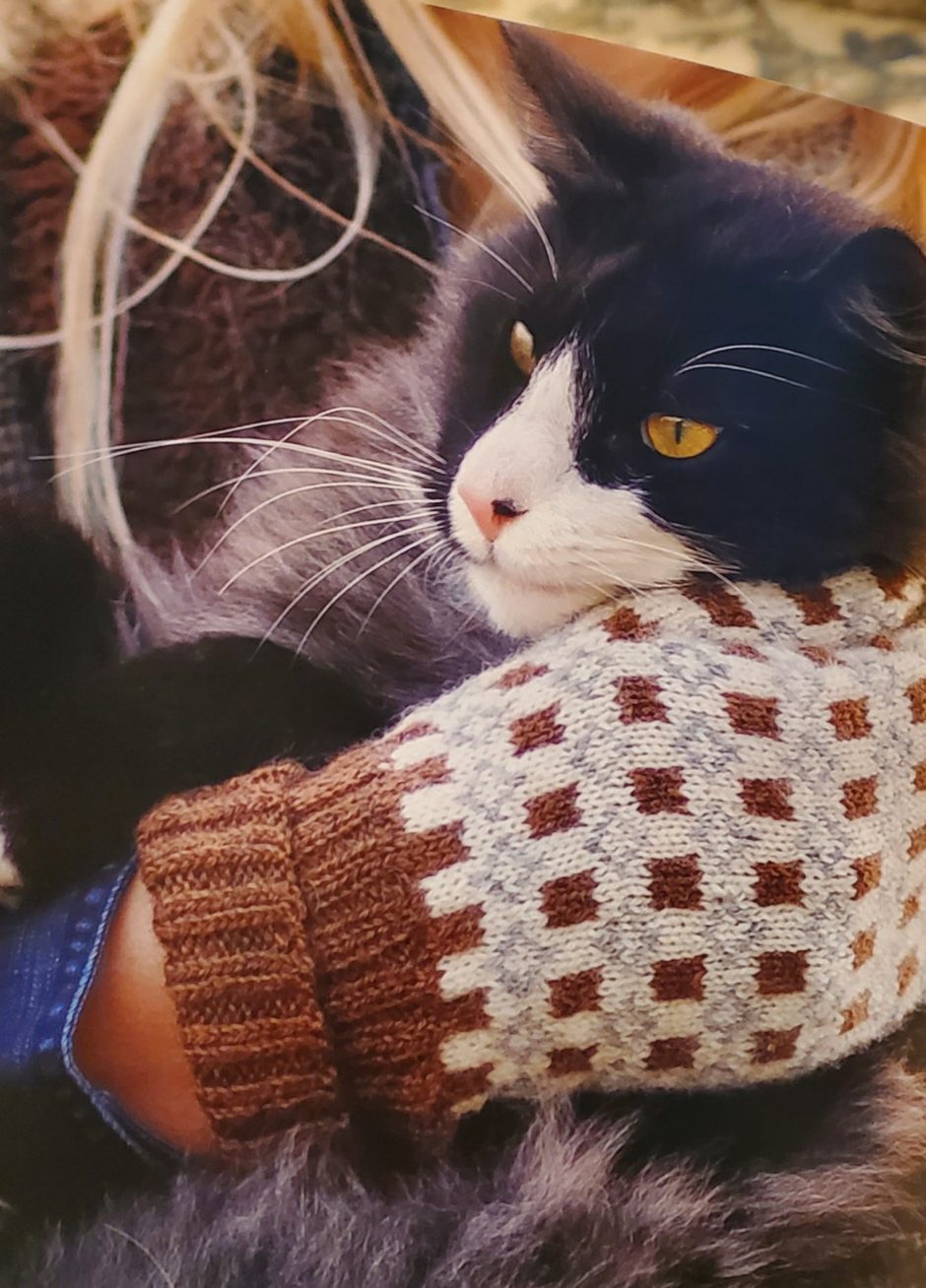
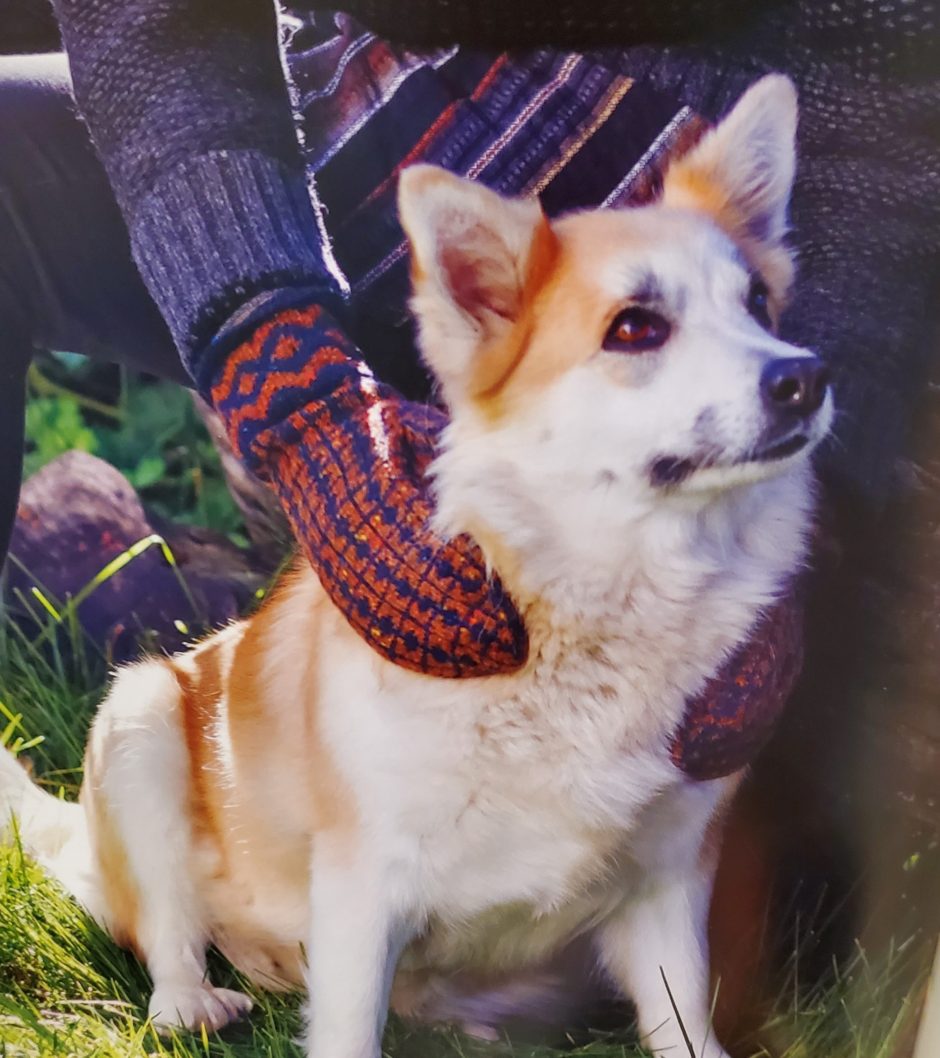
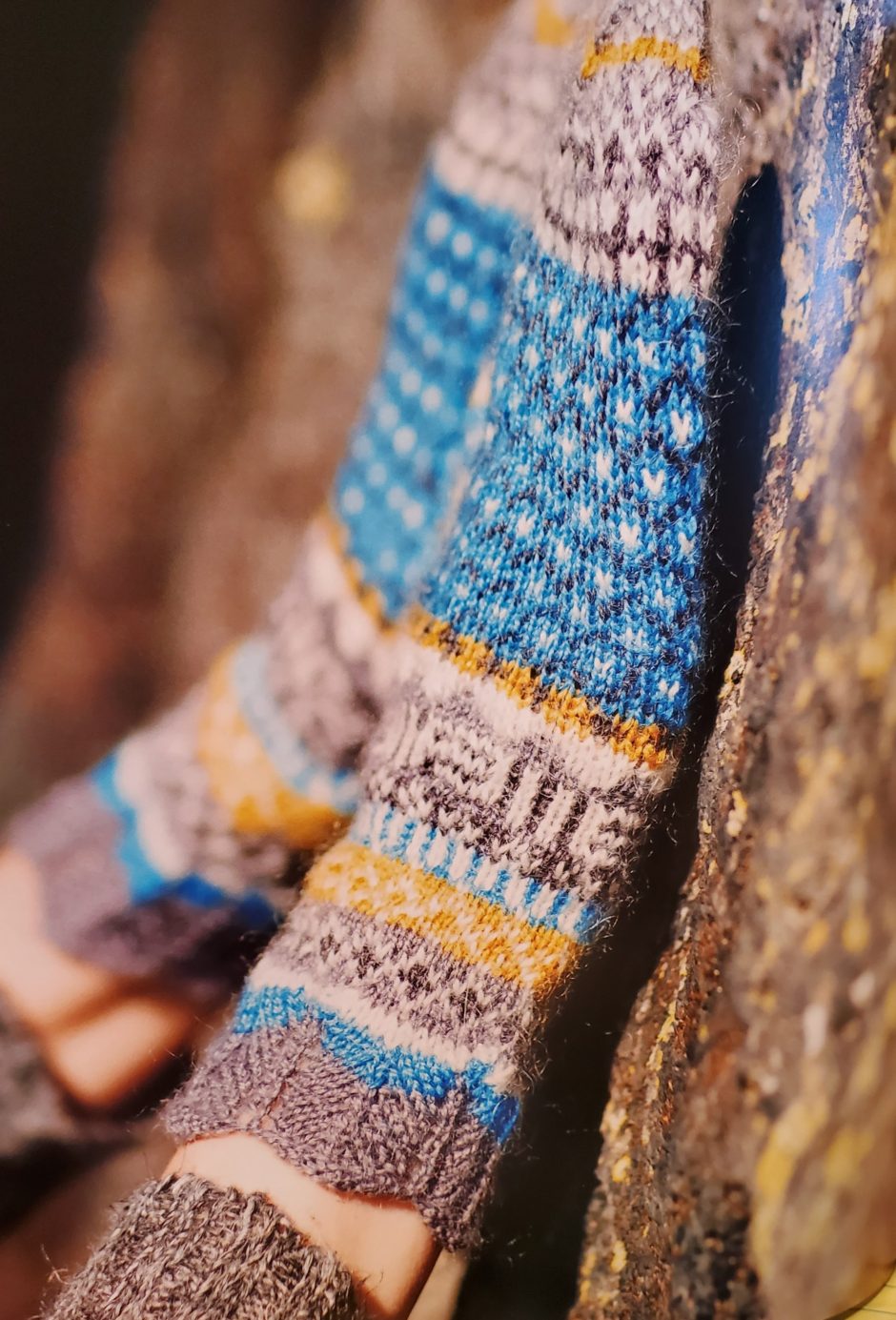
So our first book of the new year gets two (afterthought) thumbs up!
Please note that I may receive a small commission for items purchased through the Amazon link above.
