
When I was a child, someone gave me a set of Laura Ingalls Wilder’s Little House books. As a Gen-Xer, I was the ideal age. The books tell the story of Wilder’s childhood in the late 19th century, beginning with a five-year old Laura living in the family’s log cabin in Wisconsin’s “Big Woods.” Over the series of nine books, we read about the family’s journey west in a covered wagon and their attempts to homestead in various places, finally settling down in a small town in Dakota territory. The books have been consistent best-sellers for decades and won many awards, although in these more enlightened times, the racism and colonialism are tough to read.
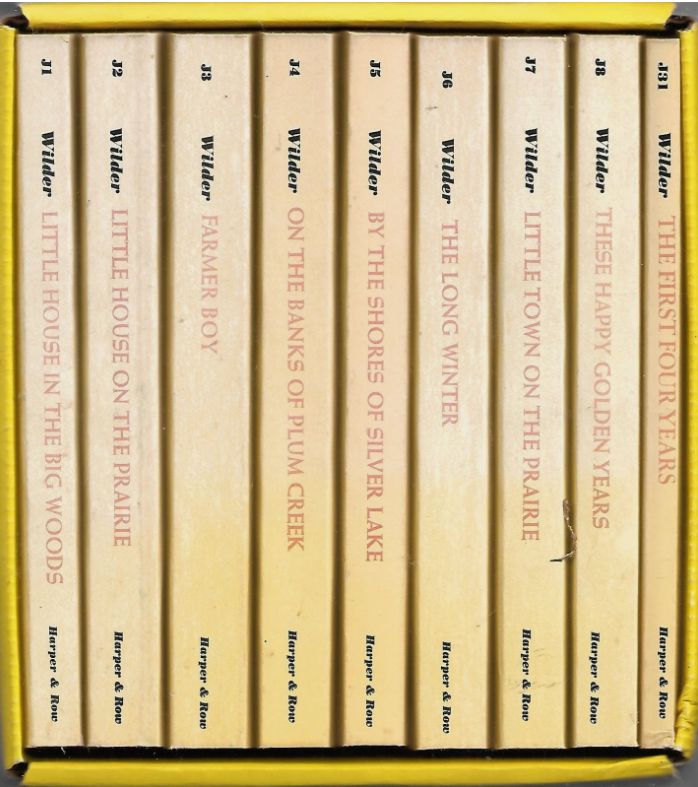
My Little House books lived in their yellow cardboard box.
I read the books over and over as a child. There weren’t many buffalo or prairie roses or grasshopper plagues in my suburban neighborhood, but I loved to imagine I lived in that little house. I tried to do some of the things that Mary and Laura Ingalls did (sadly, I discovered it’s impossible to make maple sugar candy using ice cubes and Mrs. Butterworth). I made myself a sunbonnet. I dressed as Laura one Halloween (and I was furious when one of the teachers said “oh, look at your old-fashioned schoolmarm outfit.” Bitch, I am Laura freakin’ INGALLS!!).
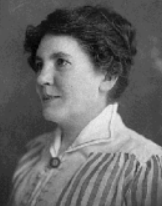
Looking back, I’ve tried to figure out what made me gravitate toward the books. Maybe it had to do with the high stakes; the Ingalls family was always facing life or death obstacles, which really focuses one’s attention. Maybe it was the closeness of the family and the enjoyment of simple pleasures, like Pa fiddling in the twilight as the Ingalls sat around the campfire. (The Sulcoski family occasionally sat on the harvest gold couch to watch All in the Family, but, really, that’s not the same thing at all.) Maybe it was respite from the things happening in the 70s — the Vietnam war, the gas crisis, Watergate. Maybe it was that particularly catchy Schoolhouse Rock about manifest destiny.
The first time I revisited the books as an adult was when I read them to my kids before bedtime. My oldest was especially fascinated by them. We even discovered that there were prequels written about Laura’s mother, grandmother, and great-grandmother and dutifully read them all. But I simply wasn’t prepared for my reaction to reading the series as an adult. All of a sudden, the realities of homesteading and farming read totally different. With babies of my own, living miles upon miles from doctors in a world without antibiotics felt terrifying. Stepping outside to face a wolf, beating off clouds of grasshoppers, or grinding seed wheat in a coffee grinder to avoid starving to death doesn’t sound fun or adventurous to an anxious adult.
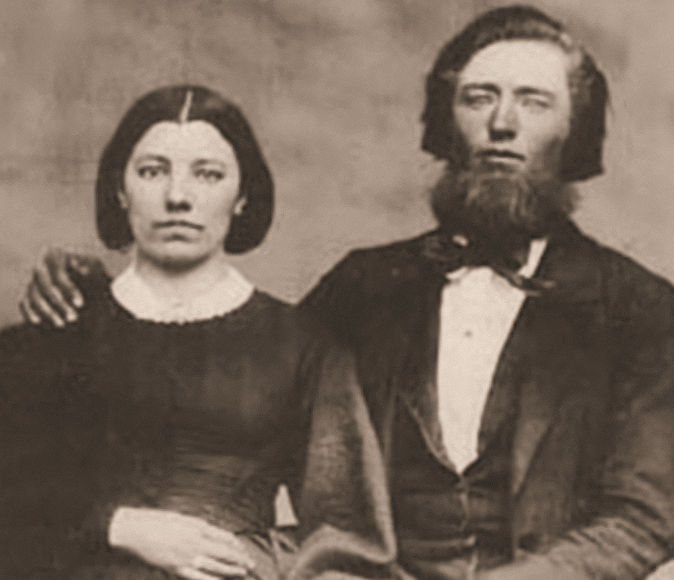
But what stung the most was my reaction to Ma and Pa Ingalls (shown above). In the books, Ma Ingalls is portrayed as comforting, unflappable, kind, with a cure for every problem. But as an adult, Ma struck me as judgmental and kind of a dick. (How dare she force Laura to give away her precious doll to a rich bratty tot who threw her into a puddle? Spoiler alert: The part about Laura rescuing her from a puddle was MADE UP!) Ma was also a huge racist, with a deep hatred and fear of Native Americans. Pa didn’t fare any better. It seemed like every time the family had a decent house to live in, Pa would get his “itchy feet” and insist that the family leave it all behind and go further west. I mean, is it so unreasonable to want your children to get an education or to stay in a cozy house instead of waiting for blizzards to bury your tar-paper shack? And in his obsessive trek to find the perfect place to settle, he paid no mind to the price the Native inhabitants would pay.
So maybe I should have been better prepared to read Caroline Fraser’s biography of Laura Ingalls Wilder, called Prairie Fires: The American Dreams of Laura Ingalls Wilder (Metropolitan Books, 2017).
Readers often debate whether the Little House books are memoirs or fiction. I never really thought about it before, assuming they were biographical, but after reading Prairie Fires, it’s pretty clear that they are highly fictionalized. By reviewing correspondence, drafts, and other writings, Fraser shows how the core stories came from Laura’s memories, supplemented by the recollections of her sisters, her husband, and parents. Much insight into Laura’s early life is drawn from Laura’s memoir, Prairie Girl, which she wrote before the Little House books (it has since been published). As Fraser explains more about the details of Laura’s life, you start to see how much has been smoothed over or omitted completely from the Little House books.
The real Laura Ingalls had a childhood that was hardly idyllic. Let’s be honest: the Ingalls family teetered very close to the edge. The Little House books give a highly abridged version, simplifying the family’s trajectory into a single westward migration. In real life, however, the family’s path was not so clear. The family moved a lot, going back east and then west then back again. It’s not just a function of making the narrative easier for a child to read; the constant moves reveal a family desperately trying to recover from frequent financial disaster. The Ingalls’s prospects were so dire at one point that they moved to a hotel in Iowa to try to regain their financial footing. The hotel clientele were so rough and the customers of the saloon next door were so ill-behaved that the Ingalls family soon had to find other lodgings. (This period is sometimes called “the missing link” by Little-House-heads because it was entirely omitted from the books.) Finally the family packed up and left in the middle of the night because they couldn’t pay their debts.
Other gritty and dark incidents are removed from the Little House books. Ma Ingalls gave birth to a son called Freddy who died as a baby; no mention is made of this poor little soul who died shortly before the family left for Iowa. In one shocking incident, a man was so drunk on whiskey that when he lit a cigar, the alcohol fumes caught on fire and burned him terribly. While living in the Iowa hotel, an eleven-year-old Laura awoke to find a drunken man in her bedroom and screamed until he ran away. Domestic abuse, alcoholism, horse thieves, Pa’s (dubious) claim of participating in a posse to capture a family of serial killers. . . Wilder’s childhood was hardly the wholesome upbringing that the Little House books describe.
It’s especially ironic that the book’s message of self-reliance and hard work clashes against the Ingalls’ family’s real-life experiences: crops destroyed by grasshopper plagues, weather that made it impossible to grow food or keep trees alive, scarlet fever that took Mary’s vision, economic conditions that made it difficult to turn a profit even for a bumper crop. None of these events were within the family’s control and all the self-reliance in the world couldn’t stave them off.
Nor can the cheery self-sufficiency of the books conceal the darker aspects of what was euphemistically known as “homesteading.” It’s impossible to ignore the books’ acceptance of colonialism and violence cloaked in the concept of manifest destiny. In the original print run of the Little House books, Wilder wrote that the family was traveling to a place “where there are no people, only Indians lived there.” (Sit with that one for a while. ) Thankfully, that line has been excised but the subjugation of and violence to Native Americans cannot be removed from the series that easily. One scene that stuck with me involves the family watching a long line of Native Americans being forced off their land to march west. Laura sees a baby being carried in a cradle board and begs her father to “get the baby” for her, as if the baby were a toy instead of a real child with a family who cherished her.
The original Little House books end with “The First Four Years,” a slim volume describing the early years of Laura Ingalls’ marriage to Almanzo Wilder. It’s here that the rose-colored glasses start to slip. Crisis after crisis hits the young couple — more ruined crops, the death of an infant son, their house burning down, Laura’s depression. It makes sense that the series ends here, in a dark place with problems too complex and grown-up for a children’s book.
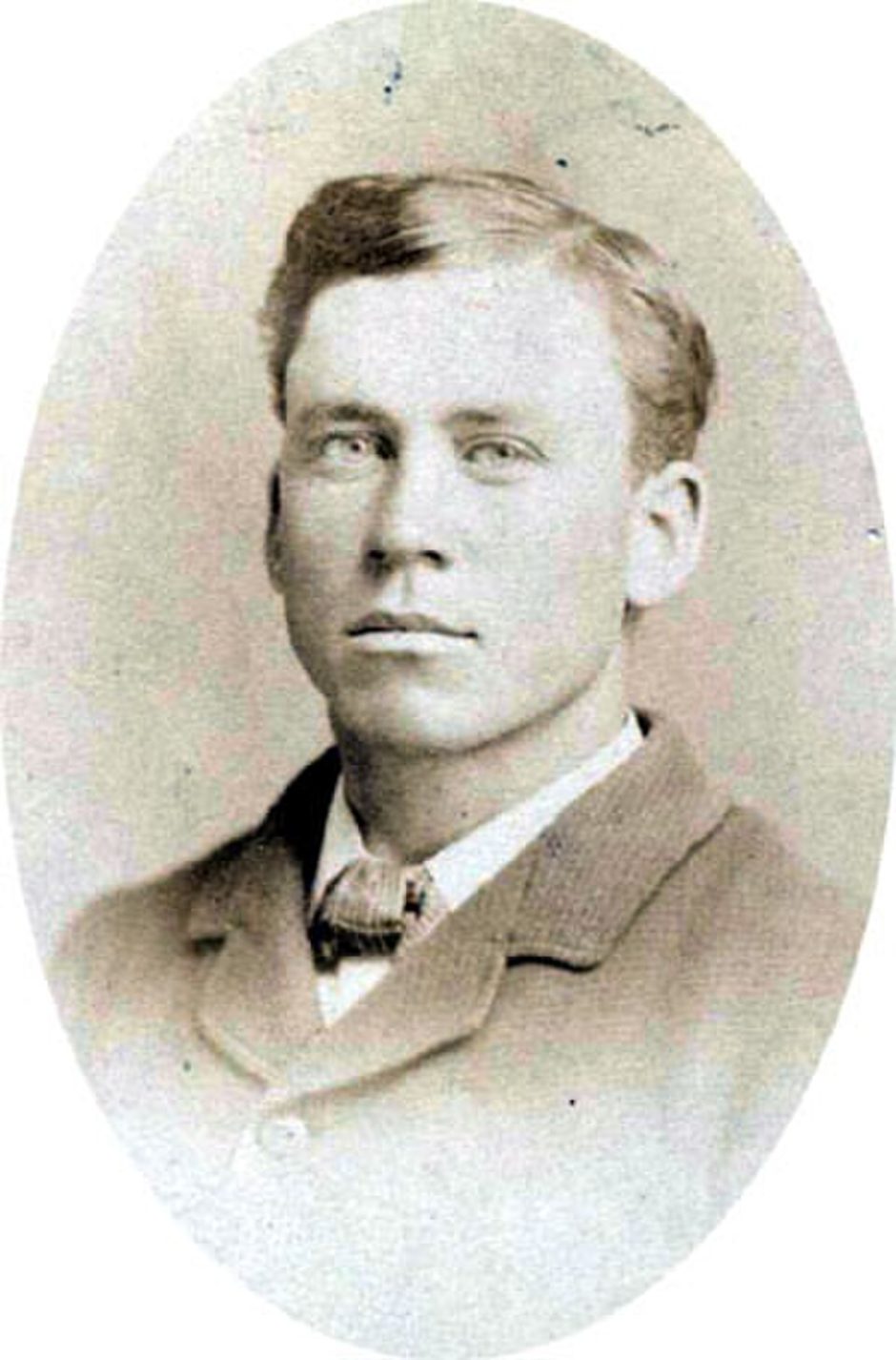
Prairie Fires, on the other hand, does not stop short right after Laura’s marriage, but devotes a sizeable section to the Wilders’ life after their first four years. After several attempts at homesteading and farming, including a trip to Florida to check out the prospects, the couple, with their daughter Rose, ultimately settled in the Ozark Mountains of Missouri. But their lives continued to be a struggle. It proved equally difficult to eke out a living on their rocky farmland. The family didn’t give up, but they faced heartbreaking issues like Almanzo’s health problems and paralysis, continued farming failures, and a stormy relationship with their daughter Rose, who was plagued by financial and mental health issues.
The book also delves deeply into the writing of the Little House books. Laura began by submitting farm-related articles to local magazines, and her writing career slowly took off. Her initial memoir, Prairie Girl, was rejected by publishers. After a time, encouraged by her daughter (who was a writer herself), she began to work on a children’s book focusing on her memories. People have debated through the years how much of the Little House books were actually written by Laura versus Rose Wilder Lane, and Fraser covers this debate, intertwined with Rose’s messy and often unhappy life. It was only in Laura’s later years, after the Little House books became popular, that she achieved some measure of stability in her life.
I enjoyed reading Fraser’s biography (which won a Pulitzer Prize) and learning more about Laura Ingalls Wilder’s actual life, as disillusioning as it was. Still, a part of me still regards Wilder as something of a hero if for no other reason that she was a survivor. From her childhood on, she helped carry the people she loved through the most terrible times of their lives, whether by washing dishes, teaching school, sewing shirts or twisting goddamned sticks of hay to avoid freezing to death on the frigid Dakota plains. Looking back at your childhood heroes can be disillusioning, but you may find something about them that helps temper the disappointment.
Photos: Public Domain
Prairie Fires: The American Dreams of Laura Ingalls Wilder, by Caroline Fraser, Metropolitan Books (2017)

I had a similar childhood experience with the Little House books. Ironically, the first three books were given to me as a birthday gift when we were living in the U.K., by the little British girl who lived next door to us. Quite an eye-opener for me when I read some of the contemporary writings about Laura Ingalls. I note that there has been a ton of criticism of the new Netflix Little House series, but I actually like it better than the 1970s series. But still fiction with some pretty wild stretches!